
Pulpitis is a condition where the dental pulp becomes inflamed. The dental pulp is right at the center of a tooth and is covered by dentin, which is protected by tooth enamel, the tough outer coating of a tooth.
A dental pulp consists of nerves, connective tissues, and blood vessels, and it can become inflamed if the pulp is infected or damaged. Often, a dental pulp is inflamed due to severe tooth decay.
Your tooth can become decayed if the tooth enamel becomes worn or eroded or chipped or cracked. Any opening in the tooth enamel allows infection-causing bacteria to enter the tooth. Dentin is much softer than tooth enamel, so it is more quickly eroded, and before long, these harmful bacteria will reach the dental pulp, causing infection and inflammation.
What Causes Pulpitis?
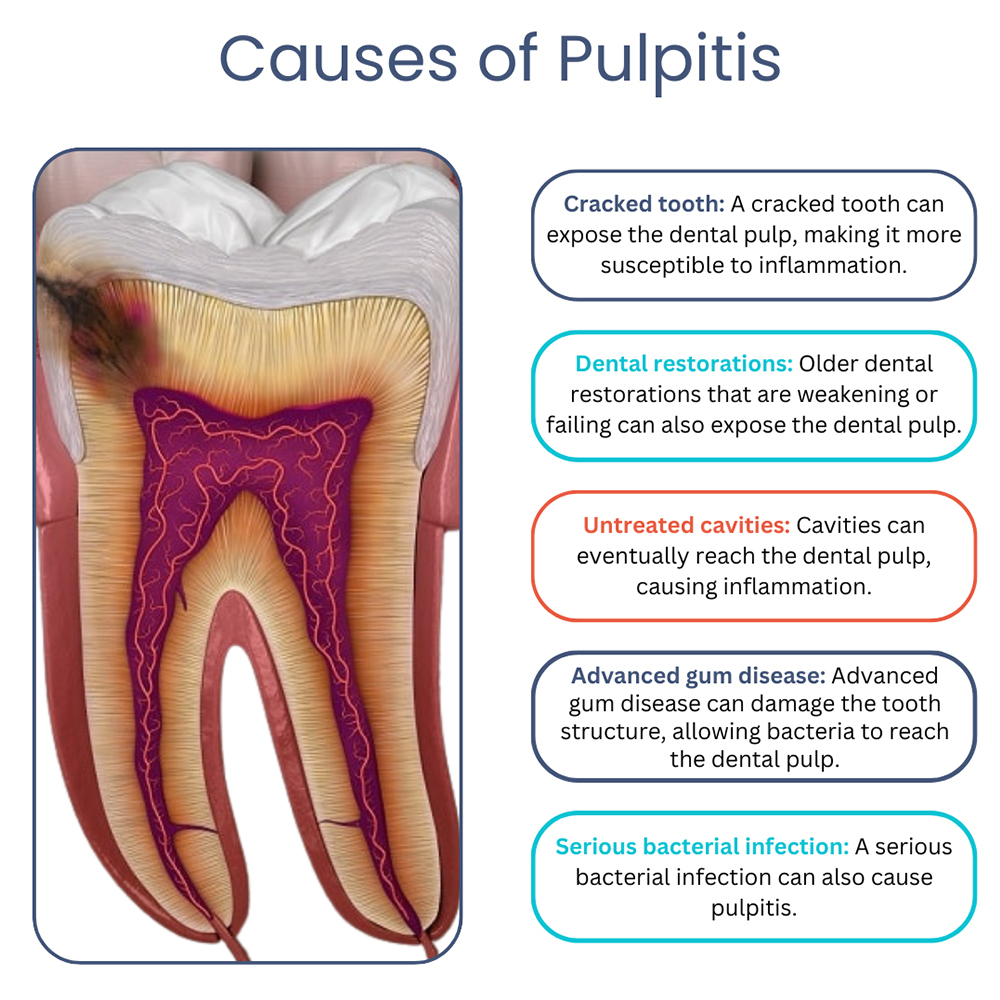
Pulpitis can be caused when a tooth is injured, resulting in the dental pulp becoming inflamed. Possible reasons include a cracked tooth, as a fracture can expose the dental pulp. You can get a cracked tooth by biting down on something hard, chewing on ice cubes or grinding your teeth, or if you take a blow to the mouth.
Pulpitis can also develop if you have older dental restorations that are weakening and beginning to fail, potentially exposing the tooth dentin and the dental pulp.
Pulpitis can develop after dental work, and usually, this is reversible. Other possible causes include:
- Untreated cavities
- Advanced gum disease
- Serious bacterial infection
There are two different types of pulpitis:
- Reversible pulpitis is where inflammation is still in its early stages and can be eliminated by treating the tooth
- Irreversible pulpitis is where the inflammation has severely damaged the dental pulp, and it is impossible to save
Patients Experience
Success Stories
Best dental experience ever
Best dental experience ever. Professional and very clean office. Everyone from the receptionist to the hygienist to the dentist are amazing. So friendly and patient. You can even watch TV while getting work done on your teeth!
What are the Signs of Pulpitis?
The main sign of pulpitis is pain. The pain can be intense and throbbing, or the tooth may have a dull ache.
If the pulpitis is reversible other symptoms might include:
- Sensitivity to cold lasting a few seconds only
- Sensitivity to sweet foods and beverages
- The tooth won’t hurt if you tap it gently
- Sharp pain
The symptoms of irreversible pulpitis are different and can include:
- Intense tooth pain that comes on spontaneously
- The tooth may feel painful when you tap it
- Sensitivity to cold will last longer than 30 seconds
- The tooth will also feel sensitive to heat
- The gum around the tooth may look swollen
- It can be difficult to identify the tooth that is hurting as the pain can move around
- You could develop a fever and will have persistent bad breath
When pulpitis is irreversible, the inflammation can cause the pulp and the tooth nerve to die. Consequently, the pain might stop, but your tooth could still hurt when you tap it, and there is a risk that the tooth can become infected and develop a dental abscess.
Once an abscess develops, it causes severe infection and inflammation, pushing the tooth slightly out of its socket. As you bite down on the affected tooth, it could feel higher.
What is the Treatment for Pulpitis?
Pulpitis treatment depends on whether the condition is reversible or irreversible.
Reversible Pulpitis
Usually, reversible pulpitis is treatable by addressing the underlying problem. For example, filling the tooth can solve the problem if you have tooth decay. If the issue is due to dental work, repairing or replacing the restoration can eliminate the inflammation.
Irreversible Pulpitis
If the inflammation has caused extensive damage to the dental pulp, you will need root canal therapy. Root canal therapy is a procedure that removes the dental pulp in the crown of your tooth and cleans out the root canals extending into your tooth roots.
Afterward, the empty pulp chamber is cleaned thoroughly and disinfected before being permanently filled. Usually, you will need a dental crown to protect the tooth afterward. If the damage to the tooth is worse, for example, if you have a dental abscess, we may need to remove your tooth as this will allow the infection to drain.
Sometimes medication is needed to treat pulpitis. For example, over-the-counter painkillers can relieve discomfort. Usually, antibiotics aren’t necessary unless we think an infection is present, as pulpitis isn’t always due to bacteria.

Dr. Adam Shoukry, DDS, is a cosmetic dentist who strives to provide each of his patients with personalized care and educate them on the state of their dental health so that they can make informed decisions. Dr. Shoukry really enjoys his work and is committed to continued education, having attended several accredited courses in every aspect of dentistry.
Dr. Shoukry graduated from NYU College of Dentistry with a Doctor of Dental Surgery degree and then completed his general practice residency at Nassau University Medical Center. Being a member of the American Dental Association, the Academy of General Dentistry, and the American Academy of Cosmetic Dentistry, Dr. Shoukry strives to provide comprehensive dental examinations, a full range of cosmetic treatments, and the best restorative oral health care available.